
Fellow, Lecturer
2007/08 - The Evelyn Green Davis Fellowship

The Radcliffe Institute Fellowship is a scholarly community, supporting a one year residency for advanced study of scholars, scientists, artists, and writers of exceptional promise and demonstrated accomplishment in academic and professional fields and in the creative arts

What an extraordinary year living and working with this marvelous company of Fellows, supported by the vision of the Institute and its staff. It was a year spent developing my film project: La Voz del Cuerpo / The Body Speaks and learning from and with colleagues in a wide variety of fields - sensory and brain overload of experience. An end of year lecture and performance, accompanied by pianist Louis Stewart. Fellow Jane Wang and I continue to follow our conversations with artist and scientists, designing our seminar Locomotion/Emotion funded by the Institute. The seminar gave birth to the Dancing Leaf Group.
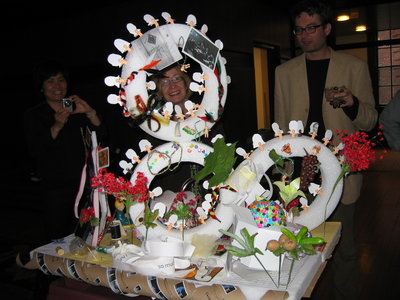
Through the eyes of a dancer and director, we examined selected works of Martha Graham's dance theater, exploring the psychological, physical, creative, and political elements of Graham's life and work and her collaboration with 20th Century contemporaries, artists Aaron Copeland, William Schuman and Isamu Noguchi. Movement lab included basics of Graham's dance technique including gestural elements drawn from Graham's choreography as a universal body language.

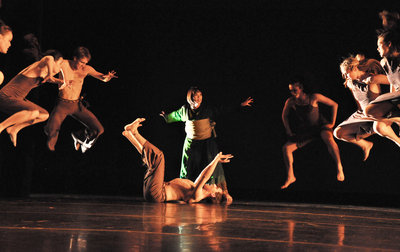

A talk and master class at the first conference of the Centro Nacional de Investigación, Documentación e Información de la Danza, CENIDI-Danza José Limón, Director, Elizabeth Cámara. It was held at the University of Colima, Col. México in collaboration with Instituto Nacional de Bellas Artes; Universidad de Colima, Instituto Universitario de Bellas Artes and Universidad Autónoma de Baja California, Escuela de Artes
An Exhibition and Symposium organized by The Harvard Theater Collection, Director, Fredric Woodbridge Wilson, Curator. I spoke on this panel led by George Jackson at Harvard University's New College Theater.


The emergence of reception as an increasingly central subfield within classics represents in part a new direction, in part the renaming and redefinition of familiar activities, formerly known as history of scholarship and study of the classical tradition. Those activities have generally been understood as prolegomena to, or digressions from, the classicist's main business of studying antiquity, but with the name "reception" comes the claim that reception is an integral part of classics itself. Construed this way, reception offers classicists both an expanded reach and the promise of a new theoretical basis for our discipline.
— Bridget Murnaghan, Bryn Mawr Classical Review 2007.07.19

In the previous year I was delighted to give a lecture, Night Journey: Martha Graham's reception of Oedipus Rex, for Prof. Schironi, Department of Classics, discussing Graham's transformation of the Greek tragic form into dance art. April 24, 2008
Performance, Choreography
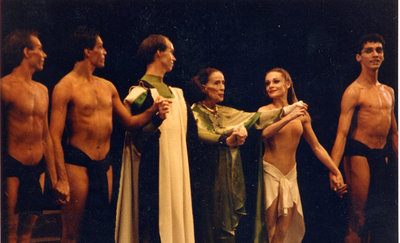
April 15, 16, 2010

"Inside/Out" will bring together artists, public intellectuals, and scholars in the fields of design, the humanities, and the social sciences to consider the dynamic interaction between two notions: how gender affects the way we experience, construct, and use spaces, and how space influences how we think about gender.

The program was funded by Harvard's Office for the Arts and the Dance Program, Director, Elizabeth Bergmann
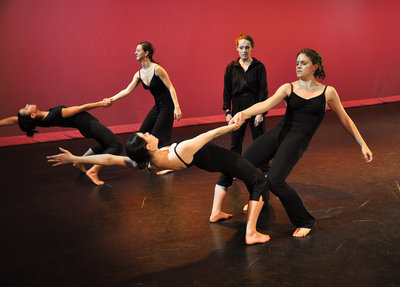
Mexican choreographer Jaime Blanc's Consagración de la Primavera (2005) is a mating dance, a celebration of human fertility. The theme is sexual hunger as primal urge. Using elements of folklore and a modern dance vocabulary, Blanc devised a new scenario but kept the idea of renewal, sacrifice, and tribal continuity that underlies Nijinsky and Stravinsky's conception.On the surface this dance has no resemblance to Nijinsky's choreography, but its savagery, its structural and expressive parallels with the music, and its commitment to nature's mysterious processes make it a convincing sequel. — The Epoch Continues - Marcia B Siegel. The Hudson Review. New York: Summer 2009. Vol. 62, Iss. 2; pg. 303 —


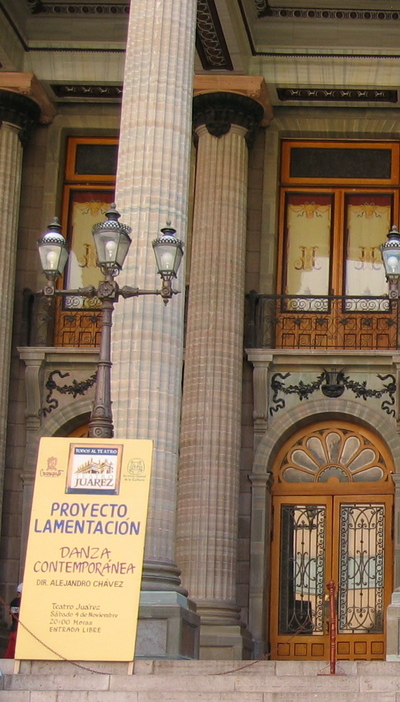
 he celebrates the interlocking traditions of Martha Graham and Mexican contemporary dance founder, Guillermina Bravo. It is a legacy we share and Alejandro's award-winning choreography takes it forward.
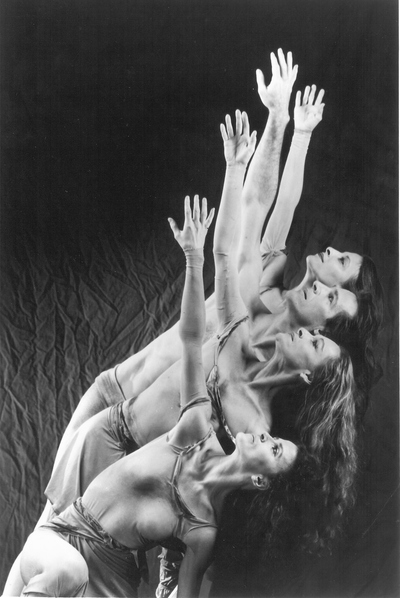
After more than a decade together performing with Martha Graham, Jacqulyn Buglisi, Donlin Foreman, Terese Capucilli and I founded this company in 1994 as Buglisi Foreman Dance. Our premiere season at Lincoln Center's Clark Studio Theater in the full evening work Runes of the Heart began a long, productive collaboration; with lots of our own drama, a wonderful and generous group of supporters, audience and dancers, and an incredible body of work exploring our vision of theater.
— Margo Jefferson The New York Times, May 29, 2000
Buglisi/Foreman Dance (this is its fifth season) renews the Graham technique in all its full-bodied glory. ..Everything is here: those potent torsos, contracting, releasing, spiraling; legs, arms and heads alert to every surge of emotion. And this is not because they are in the first flush of discovering Graham. The choreographers, Jacqulyn Buglisi and Donlin Foreman, and their co-founders, Terese Capucilli and Christine Dakin (magnificent dancers both), are all long-time Graham company members.But no one here is shadowed by Graham's overwhelming temperament, by that ruthless glory-driven — as she used to say, doom-eager — embrace of suffering, struggle and self-discovery. They have inherited her theatrical mastery of lighting, costumes and stage space, her way of making us feel that each dance is an encounter with destiny. It's the Buglisi/Foreman sense of destiny — or of our many destinies — that's new. Ms. Buglisi and Mr. Foreman are drawn to the expressive nuances, the everyday emotions that bind and separate us even when desire or grief is most acute. They explore quiet (call it the action of contemplation) and the give and take between couples or groups. Jacquie's Frida
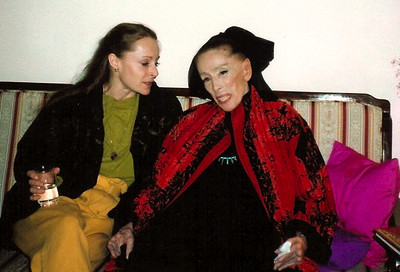
To become a dancer through the Graham work, and with Martha, was a great joy: to develop body and mind and discover how inextricable they are. Her technique revolutionized dance and even before seeing her dances, it captured me: falling in love with organic, deep, powerful movement.

It was a privilege to work with Martha, to learn from her, laugh with her, be a part of creating, embodying, her dances and to know her as an artist, and woman. As a young dancer I soaked up everything, performing in the chorus, learning from the other amazing dancers. Later, performing solo and principal roles in the same works, I understood them from another perspective and could sink deeply into them over many years. Directing the Company, the challenge was to share what I know about Martha's technique and her art, make the works alive and pass them on to new dancers and audiences.
Martha Graham’s vision was enormous. She engaged the world widely, avidly, passionately. She made incredible demands, opened vistas intellectual and physical; watching her, you could witness what creativity means, how uncompromising art is, and what it costs. It is a way of being in the world I embraced.
1999 & 2000
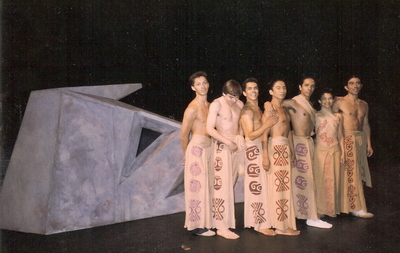

Una obra que recoge imágenes y ritmos del pasado de México y de su presente, para crear un ciclo de descubrimiento. El ciclo sigue a alguien que ha alcanzado el fondo y regresa para llevarnos al inicio. Una danza del pasaje de la vida dentro del cual buscamos definir nuestra individualidad a través de devociones de creatividad, fe o poder.
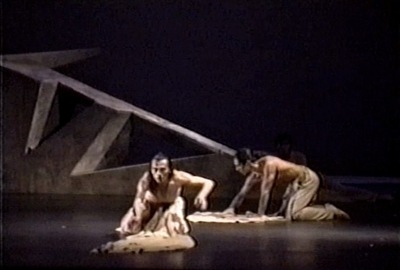
Boca de las Piedras
Premiere May 20, 1999, Centro Nacional de las Artes, México
Choreography and Design
Christine Dakin
Music
Eduardo González
Costume Design
Jeffrey Wirsing
Costume Realization and Construction
Sergio Morales
Set Realization and Construction
Steve Mauer with Héctor Pérez Dorantes
Set Painting
Eduardo Lemus
Performed by
Raúl Almeida, Luis Arreguín, Beatriz Juan-Gil, Sergio Morales, Luis Martín Reséndiz
Orlando Scheker, José Tobilla, Juan de Dios Torquemada, Jesús Tussi
(dancers of the Ballet Nacional de México, Director Guillermina Bravo)
La creación e investigación para esta obra fue patrocinada por El Fideicomiso para la Cultura México-Estados Unidos, un programa conjunto con del Fondo Nacional para la Cultura y las Artes, la Fundación Cultural Bancomer y The Rockefeller Foundation, con colaboración de Ballet Nacional de México, Directora Guillermina Bravo; Instituto Cultura Yucatán, Director Jorge Ezma Bazan; Compañía de Danza Contemporánea de Yucatán, Directora Graciella Torres Polanco y Instituto Universitario de Bellas Artes de Universidad de Colima, Director Maestro Rafael Zamarripa.

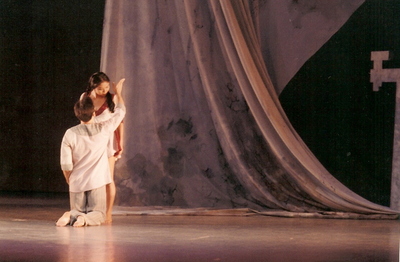
Matlatemi: En pugno las piedras
(Matatena: Fistful of Stones)
Premiere: June 27, 2000 Teatro Peón Contreras, Mérida, México
Choreography and Design
Christine Dakin
Set and Curtain Design and Painting
Eduardo Lemus
Set Realization and Construction
Steve Mauer
Music
Carlos Gutierrez
Music Editing
Aldo Borsoní
Costume
Russell Vogler
Costume Construction
Ledy Torres
Lighting Design
Graciella Torres Polanco
Lighting effect
Emilio Vera
Performed by
Elena Ruiz, Erika Torres, Lourdes Magallanes, Nicolás Flores, David Torres, Fanny Ortíz, Cariño Cervantes, Rosalía Loeza
and apprentices
Leticia Sanchez, Luzelena Berumen, Ernesto Martínez
I thank scholars and friends Sr. Bermejo, Prof. Menalio Garrido and Mtro. Jorge Ezma Bazan for their generosity, sharing insights and knowledge which became an important part of my process of discovery and creation.
Matlatemi was created for the dancers of Compañía de Danza Contemporánea de Yucatán, Director Mtra. Graciella Torres Polanco and supported by FONCA,( Fondo Nacional para la Cultura y las Artes, México), Centro Estatal de Bellas Artes de Yucatán, Instituto de Cultura de Yucatán and the Compañía de Danza Contemporánea de Yucatán, Director Mtra. Graciella Torres Polanco.

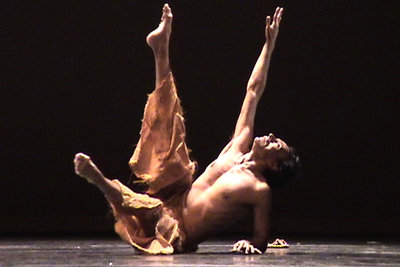
Uñas y Dientes muestra la lucha de un hombre viejo situado al margen de la vida para confrontarse con su próxima muerte. Es la calavera y la flor, la risa y el lamento. Jaime Blanc, uno de los más vigorosos bailarines de México, nos muestra esta lucha. La música compuesta por Eduardo González es una grita, la voz de la alma en cello, junto con voz sencillo de hombre.
Uñas y Dientes
(Tooth and Nail)
Premiere April 29, 2003, Centro Nacional de las Artes
Coreografía y Concepción Escénica
Christine Dakin
Música Origina
Eduardo González
Cellista
Maricela Lagunas
Canción Tradicional Interpretada
Ralph Stanley
Realización de Vestuario
Sergio Morales
Elaboración de materiales especiales de vestuario
Leticia Rayas – NaturArte
Iluminación
Jaime Blanc
Bailarines
Jaime Blanc
con
Sergio Morales, Tonatiuh Pérez y Héctor Dorantes.
(Dancers of the Ballet Nacional, Director, Guillermina Bravo)
La creación y producción de esta obra fue posible gracias al Fideicomiso para la Cultura México-Estados Unidos, un programa conjunto del Fondo Nacional para la Cultura y las Artes (FONCA), la Fundación Cultural Bancomer y The Rockefeller Foundation en colaboración con el Ballet Nacional de México, directora: Guillermina Bravo; la Compañía de Danza Contemporánea de Yucatán, directora: Graciella Torres Polanco, el Instituto de Bellas Artes de Yucatán y el Instituto Universitario de Bellas Artes de la Universidad de Colima, director: Rafael Zamarripa.
Teaching, Performance
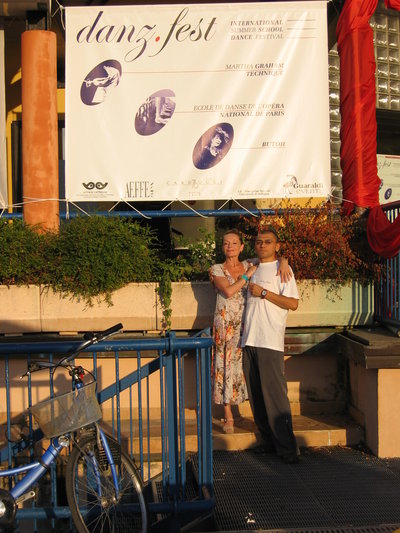

The Festival was established as an international laboratory to explore and develop the creative arts of dance; bringing together for the first time the classical ballet of the Paris Opera, the contemporary technique of Martha Graham and the Butoh dance philosophy in a unique opportunity to learn and experience these great techniques as taught by masters of their art.


 played for classes and gave a special performance with Oaxacan musicians. In 2010 with focus on photography and dance, I taught a workshop of improvisation and collaboration for dancers and photographers (Movimiento / Imágenes: Improvisaciones en vivo danza y fotografía) with photographer Shaul Schwarz directing a workshop for photo journalists. Shaul presented his own stunning and moving photography, and with his photographers participated in the Improvisation performance. Movimiento/Imágenes: Improvisaciones

Oaxacan artist Ruben Leyva.

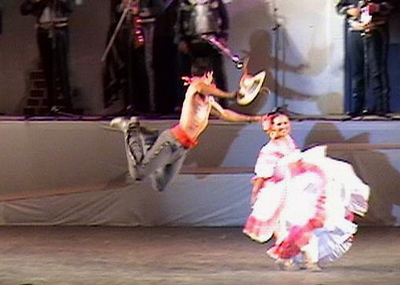

At his invitation I came as guest artist/ teacher, with a Rockefeller, Mexico /US Fund for Culture Grant, to work with his Ballet Folklórico and the contemporary company – Univerdanza. Co-directors of this company, Alejandro Avalos Vera and Adriana León and faculty Viviana Nava were all students I first taught at CENADAC. Their teaching, performing and choreography are inspiring another generation of Mexican dancers.

Zamarripa's dancers, folkloric and contemporary, embrace the Graham work, and it has been marvelous to see how the work infuses their performing, their personal style. I fell in love with the people and the city, it is an honor to be a part of this Mexican dance community, to have made them part of my family. The company founded a children’s group, Niños de Colima, bringing to the next generation the folkloric dance of Maestro Zamarripa and the modern dance training I have shared with them.

La Voz del Cuerpo would have remained a flicker in my dreams, but Maestro Zamarripa fell in love with the project and his support brought it to the University's University’s then Rector M.C. Aguayo López. All of us involved in making Voz are grateful for the University's support of the arts and the artists who make the art.
Maestro Zamarripa and the University hosted Encuentro Nacional de las Escuelas de Danza de Educación Superior Oct. 27-30, 2009
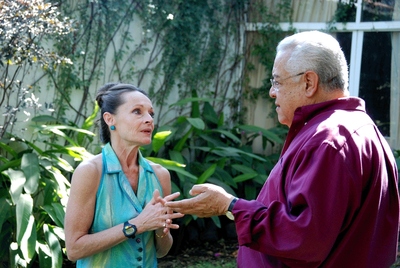
inviting me to speak: Dakin, Graham y el Ballet de la Universidad de Colima, Las Bondades de la Técnica, and give a master class at this first conference of the Centro Nacional de Investigación, Documentación e Información de la Danza, CENIDI-Danza José Limón for University and Secondary school dance teachers, students and researchers. Director, Elizabeth Cámara and Maestro Zamarripa organized this meeting which proved to be important to building a community of dance professionals in Mexico's academic institutions.
And
Ballet Nacional de México
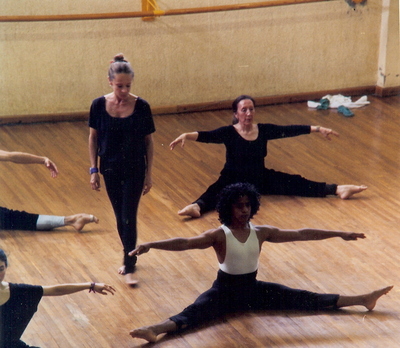
The Ballet Nacional de Mexico, founded by Maestra Guillermina Bravo more than 50 years ago, led the birth of contemporary dance in that country and defined dance training there. Based in Mexico City for most of its life, the ballet moved to Querétaro, Qro. to expand and open its school CENADAC, the Centro Nacional de Danza Contemporánea. The company, closing only recently, was trained in an authentic Graham technique more rigorously and more uninterruptedly than almost anywhere else in the world. Maestra Bravo has insured that some of the most important of Martha's dancers and teachers have been guest teachers and the Graham technique is one of the foundations of the school's six year program. I followed friends Tim Wengerd and Kazuko Hirabayashi in working with the company and school.
I have worked with and toured with the company and taught at the school since 1993, making lifelong friends among the dancers, teachers and students many of whom now have their own companies and schools. Being a part of this Mexican contemporary dance tradition has been one of the most important personal and professional parts of my life. It was a privilege and luxury to choreograph two works for the company, working with the dancers and musician/composer intensely and over the course of years to develop the works, Boca de las Piedras (1999) and Uñas y Dientes (2003).

At CENADAC the yearly International Summer Intensive course has drawn students and teachers of dance, theater and music from all over Mexico and the world. I teach technique and repertory, often bringing students from Italy and the United states with me to enjoy this special place for dance.

Robert Battle's Strange Humors
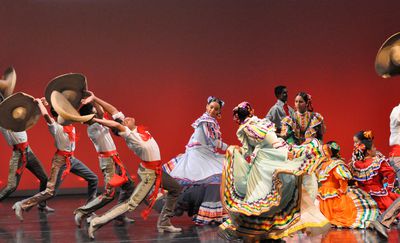
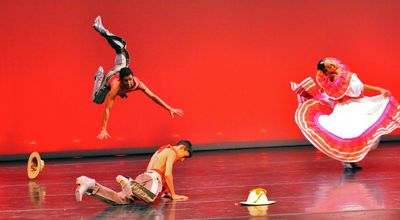
Leonid Kozlov is an old friend whose talent and artistic vision I have loved for several decades. Leonid has an extraordinary talent for teaching kids, and has turned his vast professional experience at the Bolshoi and at the New York City Ballet into an incomparable resource and inspiration for students at his school in New Jersey. In 2005 he began the Youth Dance Festival of New Jersey, a festival/competition where I have served as judge and teacher with Hector Zaraspe, Luigi, Carolyn Clark and Ravah Daley. Over the years, to bring the best of contemporary dance performance to the festival, I invited Helen Hansen from Buglisi Dance Theatre, Samuel Roberts of Battleworks/Ailey, Cedar Lake Dance, and musicians Geoffrey Armes and Pat Daugherty and Scott Morehouse to perform at the Festival. In 2011 Rafael Zamarripa's newly formed children's group, Niños de Colima delighted the Festival dancers and audience.
Leonid gives yearly holiday performances in Aruba, and has produced summer events such as the "Stars of American Dance" in which I performed and taught with Helen Hansen and Pat Daugherty.